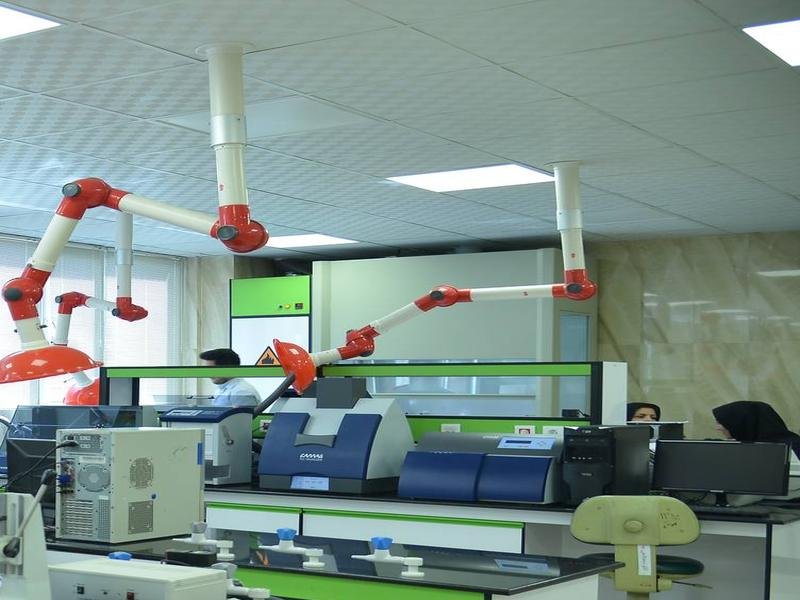
Chemical fume hoods
Bypass, restricted-bypass and VAV hoods in 1200–2400 mm widths, with airflow monitor and audible alarm as standard. Epoxy, phenolic or stainless liners and worktops.
Built in Canada
Our Products
Containment you can prove. Every hood we install is commissioned on site with a face-velocity traverse and alarm verification, and you receive the signed report.
Bypass, restricted-bypass and VAV hoods in 1200–2400 mm widths, with airflow monitor and audible alarm as standard. Epoxy, phenolic or stainless liners and worktops.
Built in Canada
Full-height walk-in hoods for large apparatus, distillation rigs and drum handling, with removable sash panels and floor-level airflow control.
Built in Canada
Class II microbiological safety cabinets for work requiring both product and operator protection, certified at installation and re-certified annually.
Imported · Scientora-specified
Ceiling-mounted canopy and dome hoods in polypropylene and steel, for autoclaves, ovens, muffle furnaces and open sample preparation.
Imported · Scientora-specified
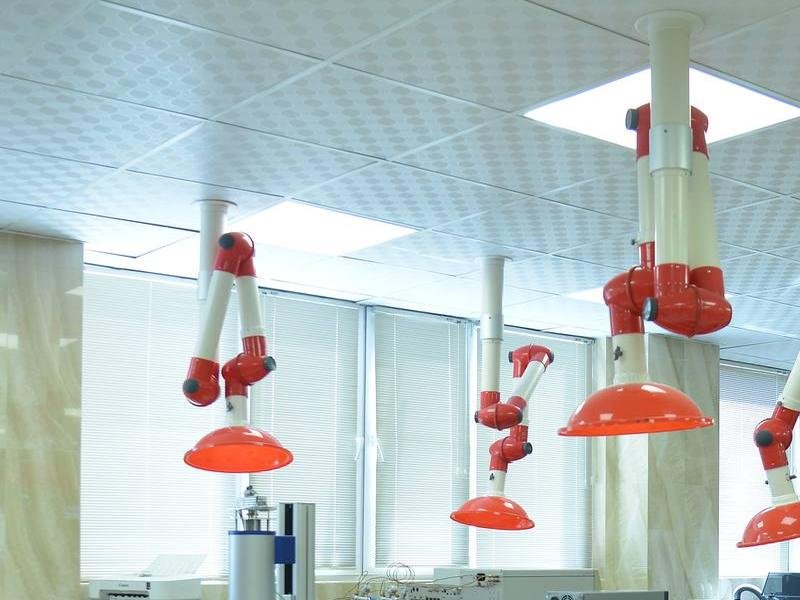
50, 75 and 100 mm two-joint extraction arms for bench, wall or ceiling mounting, with adjustable hood, damper and friction joints that stay where you put them.
Imported · Scientora-specified
Extended-reach three-joint arms for island benches and instruments that sit away from the wall — the configuration in most of our GC and sample-prep rooms.
Imported · Scientora-specified
Carbon and HEPA filtered enclosures for laboratories where ducting to roof is not possible, with saturation monitoring and a documented filter-change regime.
Imported · Scientora-specified
Under-hood vented acid and solvent storage, exhaust connection collars, dampers, transitions and roof-fan coordination with your mechanical trade.
Built in Canada
Airflow monitors, low-flow alarms, sash position sensors and VAV controllers, commissioned and set to the design face velocity on site.
Imported · Scientora-specified
Specification
| Item | Range / options | Notes |
|---|---|---|
| Nominal width | 1200 / 1500 / 1800 / 2100 / 2400 mm | Wider and walk-in configurations to order |
| Design face velocity | 0.50 m/s (100 fpm) at the design sash opening | Confirmed on site by traverse, not assumed from the catalogue |
| Design sash opening | 457 mm operating height, vertical rising sash | Combination and horizontal sashes available |
| Containment target | ASHRAE 110 as-installed rating AI 0.05 ppm | Test performed after the exhaust system is balanced |
| Liner | Epoxy resin · phenolic resin · 304 stainless · polypropylene | Chosen from the reagents actually used in the hood |
| Body | 1.5 mm cold-rolled steel, chemical-resistant epoxy powder coat | Non-corroding fasteners throughout |
| Services | Water, gas, vacuum, air and nitrogen; remote-operated valves | Valves outside the containment envelope |
| Monitoring | Digital airflow monitor with audible and visual low-flow alarm | Alarm setpoint recorded in the commissioning report |
A hood that passes at the factory can still fail in your room. Face velocity depends on the fan, the ductwork, the make-up air, the position of the door and the traffic past the sash. That is why our hoods are commissioned in place — measured, balanced and tested where they will actually be used — and why the report you receive says as installed, not as manufactured.
Most hood work we do is a replacement, not a new build. We phase it: survey and shop drawings first, then a shutdown window agreed with your operations team, containment and dust control during removal, and the new unit commissioned before the room comes back into service. See Lab Renovation for how that runs.
Request a quote
Attach a floor plan, an equipment list, a mechanical drawing — or even a phone photo of the room as it stands today. Within five business days you'll have a marked-up layout and a budget price. No charge, no obligation.